
4. Why MF51 Glass‑Encapsulated NTC with Ceramic Base?
The MF51 glass‑encapsulated NTC thermistor with ceramic base is designed for harsh actuator environments.
Its composite structure combines glass encapsulation and ceramic base support. The glass structure provides stability in high temperature, humidity, and corrosive environments, while the ceramic base reinforces the connection between the glass body and lead wires.
This helps reduce stress concentration and improves mechanical reliability.
Key advantages include:
- Better vibration and shock resistance.
- Improved sealing and insulation stability.
- Compact design for confined robot joints.
- Suitable for long‑term continuous operation.
Reliable use in humidity, oil contamination, dust, and complex environments
3. Applications in Power Supplies and Chargers.
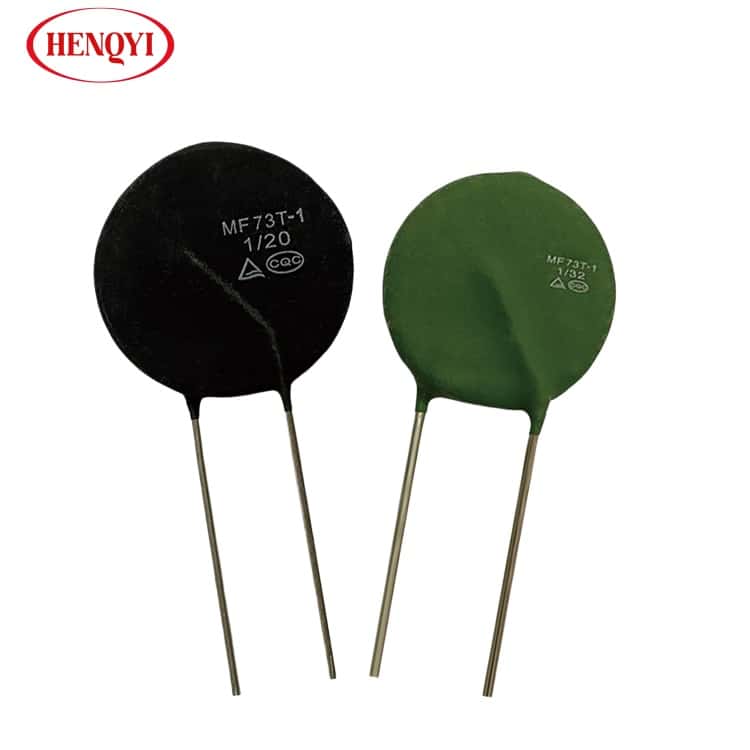
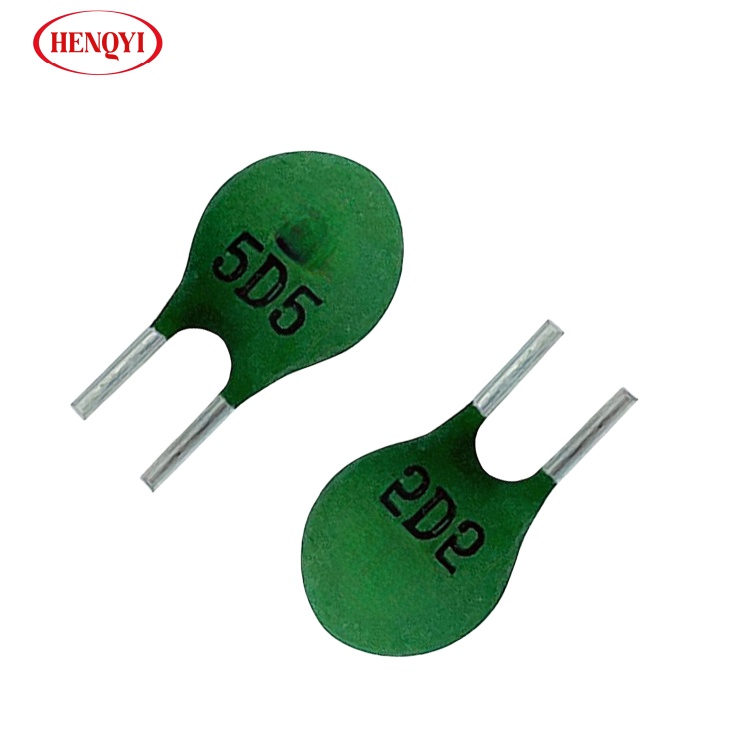
In AC/DC power supplies, NTC thermistors are typically connected in series at the input to limit capacitor charging current. Without an NTC, large capacitors can draw a significant surge current in a very short time, potentially damaging the rectifier bridge and fuse. With an NTC in place:
- Startup current is effectively limited
- System startup becomes smoother
- Component lifespan is improved
Once the system reaches steady state, the resistance of the NTC drops to the milliohm level, resulting in minimal power loss. This ensures protection during startup while maintaining high efficiency during normal operation.
4. Thermal Bypass Circuit Optimization.
In high‑power systems, even when the NTC reaches low resistance, it still generates some heat. To further improve efficiency, a thermal bypass circuit is often implemented. After startup, a relay or MOSFET shorts the NTC, removing it from the main current path.
This design offers clear advantages:
- Reduces continuous heat generation
- Improves overall system efficiency
- Extends the service life of the NTC
The NTC thermistor during startup and is bypassed during steady operation, achieving a balance between protection and efficiency.
5. How to Select the Right NTC?
Proper selection of an NTC thermistor directly impacts system reliability and performance. Engineers should evaluate inrush current suppression capability, temperature rise, and long‑term operating conditions.
Key evaluation factors include:
- Whether inrush current is effectively limited
- Whether temperature rise remains within acceptable limits
- Whether steady‑state current matches application requirements
Excessive temperature rise typically indicates insufficient power margin.
Design Guidelines
- Maintain at least ≥50% power margin for industrial applications.
- Pay close attention to key parameters: Hot resistance (Rhot) and derating characteristics
- For high‑temperature environments, select higher‑grade products (e.g., MF73T series).
Selection should consider not only resistance, but also power handling capability.
Conclusion.
Inrush Current Limiter are more than just protective components, they are essential to the stable operation of power systems. By leveraging their temperature‑dependent characteristics and combining proper selection with optimized circuit design, it is possible to suppress inrush current while improving overall system efficiency and reliability.
From startup protection to system optimization, NTC thermistors play a critical role throughout the entire power supply design process.